
In a warehouse the network is production equipment: when coverage drops, scanners, forklift terminals and picking devices stop, and throughput stops with them. Immunity designs for what racking, height and metal do to signal, on Lotus Alpha access points, NetForce switching and the NetGuard gateway.
Built for floors that run on scanners
Metal racking and dense stock absorb and reflect signal, and the environment keeps changing: an aisle that covers well when stock is low can fail when the racking is full. High-bay aisles behave like waveguides, and an access point on a 12-metre ceiling does not reliably serve a scanner at ground level.
Immunity designs for the terminals you actually run, separates traffic in NetForce switching with policy at the NetGuard X5 gateway, and watches every site from NetCloud Central.
In logistics a network fault is measured in stalled throughput. The floor judges Wi-Fi by re-scans, not signal bars.
Stock absorbs and reflects signal, so coverage shifts as levels change. A design validated in an empty building is not a design.
High-bay racking needs vertical coverage across the full rack height, not just the space under the ceiling.
Scanners, office systems, CCTV, access control and visitors never share a broadcast domain.
Vehicle terminals cross the floor quickly, and a dropped session mid-transaction means a re-scan and a stalled process.
Rugged handhelds often have weaker radios than a phone. Designing to laptop performance under-serves them.
A failing access point or saturated aisle is flagged centrally before pickers start reporting re-scans.
Each capability links to the product that delivers it.
We survey with racking in place, including full and empty aisles where the difference matters, plus dock doors and yard. Placement is aisle-aware rather than an even ceiling grid.
Explore Lotus Alpha indoor →The NetGuard X5 gateway applies policy between operational, business and building segments, and gives drivers and visitors portal access isolated from operations.
Explore NetGuard Controller →Each traffic class runs on distinct VLANs carried by NetForce managed PoE switches, sized for long cable runs and dispersed comms points. Isolation is structural, not a rule that can be misconfigured away.
Explore NetForce switching →NetCloud Central monitors one building or a whole distribution network and alerts when an area degrades, so a regional team can run sites it rarely visits.
Explore NetCloud Central →From the dock door to the top of the rack, and what we put behind each area.
They expect: Scanners that work at floor and pick height with every rack full.
We deliver: Aisle-aware placement and antenna choice suited to the rack geometry, surveyed with stock in place.
They expect: Terminals that hold their session across the floor at vehicle speed.
We deliver: Cells and handover tuned for vehicles at speed, sized around the radios your fleet actually has.
They expect: Dense scanning at loading points and continuous use through a shift.
We deliver: Higher-density coverage at dock doors and indoor coverage sized for continuous throughput in packing.
They expect: Outdoor coverage for loading and marshalling on the building’s own network.
We deliver: Ruggedised Lotus Alpha outdoor (AX821) access points on the same PoE backbone and console.
They expect: No shutdown, and proof the network works during a real shift.
We deliver: Phased installation around shift patterns, validation under load on a live shift, then central alerting and a re-survey after major racking changes.
They expect: Consistency across many similar sites, run by a regional team.
We deliver: A validated site template with local adjustments, one console for every site, and direct OEM support from India-based engineers.
Outdoor-grade access points on a solid PoE backbone, designed and made by Immunity in India.
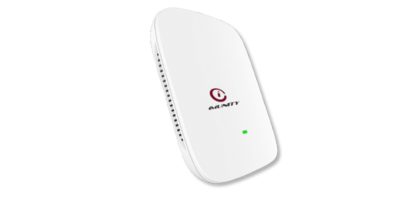 Indoor wireless
Aisles, packing and dispatch.
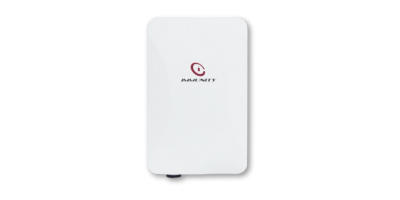 Outdoor wireless
Yard, marshalling and canopy areas.
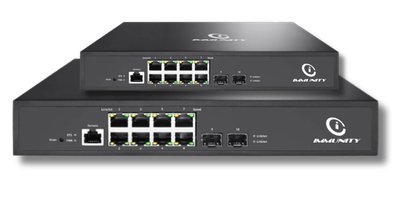 PoE switching
Managed PoE access across a large floor plate.
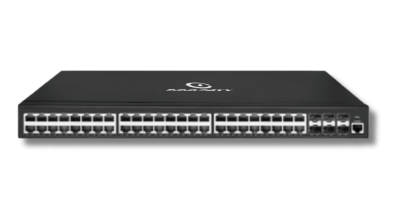 8-port PoE+
Compact managed PoE+ switching.
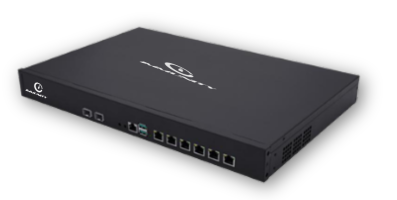 Gateway & policy
Gateway security between operations and business.
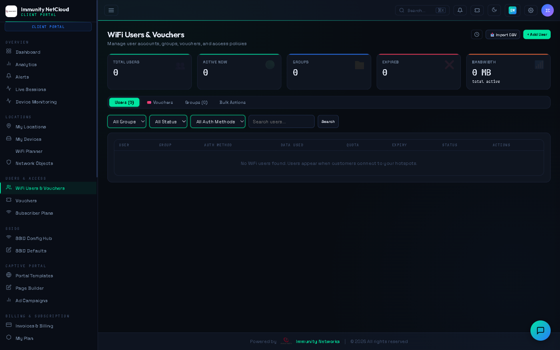 Management
Monitoring for one site or a distribution network.
Because stock absorbs and reflects signal. A design validated in an empty or lightly stocked building will not hold when the racking fills, so we survey with stock in place.
That is a roaming design question. Cells and handover are tuned for devices moving at speed, because a dropped session mid-transaction means a re-scan.
Yes. Ruggedised Lotus Alpha outdoor access points cover yard, marshalling and canopy areas on the same managed network as the building.
Insulated panels attenuate heavily and condensation affects mounting, so cold rooms are surveyed and designed specifically rather than treated as ordinary indoor space.
They can share the physical infrastructure while staying separate on distinct VLANs enforced in NetForce switching hardware, with inter-VLAN policy at the NetGuard X5 gateway.
Floor plans marked with construction type and racking; concurrent devices at the busiest hour, not headcount; traffic classes that must stay separate; existing switching, cabling and comms rooms; and where it fails today.
Tell us the floor area, racking type and height, device fleet and where coverage fails today. We return a design document (access point placement, switching and PoE, segmentation and management) that you are free to tender against.
Real sites, real constraints: how the same products were put to work elsewhere.
Passenger Wi-Fi across six international terminals, run from one NetCloud console.
Read case study →AviationStandard public Wi-Fi at 13 regional airports, rolled out with zero-touch provisioning.
Read case study →HealthcareBranded guest Wi-Fi kept apart from clinical and admin systems.
Read case study →Tell us about your sites and users. Our India-based engineers will recommend the right stack and send across datasheets and pricing, usually within one business day.