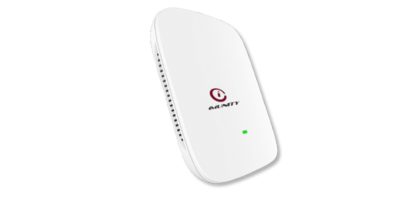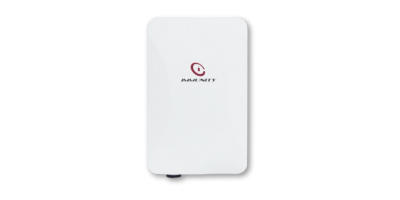
NetWave is the Wi-Fi brand from Immunity Networks & Technologies. Lotus Alpha is the enterprise access point family inside it — indoor and outdoor units, Wi-Fi 6 capable, designed and manufactured in India. This is the hub page for the whole Lotus Alpha range: what the family covers, where each variant belongs, how the access points sit alongside switching, control and cloud management, and what to confirm in writing before you raise a purchase order.
Lotus Alpha is the access point family within NetWave WiFi. If you have previously evaluated or deployed Immunity access points, this is the same Lotus Alpha line you already know — the family page has simply moved here, under the NetWave brand, so that access points, controllers, switching and cloud management all sit in one clearly signposted product structure. Everything that used to live on the Lotus Alpha page is here, with more detail and clearer routes into the individual product pages.
The family splits along the single dividing line that matters most in practice: whether the access point is going inside a building or outside it. Indoor Lotus Alpha units are built for ceiling, wall and above-false-ceiling mounting in offices, wards, classrooms, guest rooms, retail floors and back-of-house areas. Outdoor Lotus Alpha units are built for pole, mast, parapet and facade mounting across yards, car parks, quadrangles, platforms, gate areas and open circulation spaces. Those two jobs pull hardware design in different directions, which is why the family carries both rather than asking one enclosure to do everything.
Model designations you may encounter across quotations, tender documents and older site records include Lotus Alpha AX820 (indoor), Lotus Alpha OD AX821 (outdoor), Lotus Alpha LX, Alpha Platinum, Lotus XP-1241D, Omni 1200 and OD-1200. We deliberately do not publish a live current-versus-legacy table on this page, because ranges move and a stale table on a website is worse than no table at all. Ask us which models are in the current range for your requirement, and ask us to confirm current specifications in writing for the specific model before you commit to a bill of materials. That is the only version of the answer worth relying on.
One factual note about the outdoor line, stated once and without embellishment: Lotus Alpha OD is described elsewhere on this site as India's first PM-WANI certified access point. If PM-WANI compliance is relevant to your project, read that alongside the PM-WANI page, which explains the scheme and the roles within it in more detail.
The same SSID, the same policy, the same management plane — but two very different physical problems.
Indoors, the constraints are mostly architectural. Ceilings are often already crowded with lighting, smoke detectors, sprinklers, VESDA piping and ducting. False ceilings hide structural obstructions that were not on the drawing you were given. Walls are concrete, brick, glass, gypsum and, in older buildings, unexpectedly dense stone. Signal has to reach through partitions and furniture without spilling into the neighbouring tenancy. The Lotus Alpha indoor access points are designed for this environment, with mounting arrangements that suit ceiling tiles, junction boxes and surface trunking, and a physical footprint that facilities teams will accept in a guest corridor or a patient room.
Outdoors, the constraints are environmental and structural. Mounting points are poles, masts, parapets, canopies and pre-existing lighting infrastructure. Cable routes are long, exposed and shared with other services. Earthing and surge protection matter. Heat, monsoon, dust and coastal salt all shorten the life of hardware that was not built for them. The Lotus Alpha OD outdoor access points are the units to specify when the equipment will live outside the building envelope. Ask us to confirm current specifications in writing for the specific model, including enclosure protection and operating range, before you finalise the outdoor design.
Most real projects need both. A logistics site has an office block and a yard. A hospital has wards and an ambulance bay. A hotel has floors, a poolside and a porte-cochere. Rather than treating those as two separate procurements, the sensible approach is one design that spans both and one management plane that sees all of it. If you want to weigh the two families against each other for a specific building, we will do the comparison with you against the actual drawings.
Three routes into the family, depending on where you are in the buying process.
Ceiling and wall mounted units for offices, wards, classrooms, guest rooms and retail floors. Wi-Fi 6 capable. See the indoor Lotus Alpha page for variants and the specification confirmation process.
Pole, mast and facade mounted units for yards, car parks, quadrangles and open circulation areas. Lotus Alpha OD is described on this site as India's first PM-WANI certified access point. See the outdoor Lotus Alpha page.
Lotus Alpha pairs with NetGuard controllers for on-site control and NetCloud Central, our AIOps platform, for centralised visibility across sites.
Beyond those three routes, the practical question for most buyers is not "which access point" but "which access point, at what density, on what switching, under what management, and certified how". That is the sequence the rest of this page follows. If you would rather skip the reading and go straight to a conversation with someone who does this every week, take the direct route.
An access point is only as good as what it is plugged into and what is managing it.
Every Lotus Alpha access point terminates on a switch port, and that port has to deliver both data and power. This is where a surprising number of wireless projects quietly fail: the access points are specified carefully, the switching is treated as a commodity, and six months later the site is dealing with ports that cannot power a full complement of radios or uplinks that cannot carry aggregate traffic at peak. Specifying NetForce switches alongside the access points keeps that conversation on the table from the beginning rather than after handover. We will not publish a power budget on this page, because it varies by model — ask us to confirm current specifications in writing for the specific model and switch combination you intend to buy.
Above the switching sits control. NetGuard controllers handle the things that make a wireless network an enterprise wireless network rather than a collection of access points: consistent policy across sites, segmentation between corporate, guest, contractor and device traffic, guest onboarding, and a single place to make a change rather than touching every unit. What controller topology suits your estate depends on how many sites you have, how they are connected, and what your security team requires. That is a design conversation, not a datasheet lookup.
Above control sits visibility. NetCloud Central is the AIOps platform that gives a network manager one view across sites, so that a complaint from a branch does not begin with a two-hour phone call to work out which access point the user was on. For estates with fibre between buildings or between distribution points, NetBeam optics complete the picture on the uplink side.
The reason we describe the stack this way rather than selling access points in isolation is straightforward: buyers who specify only the radios end up owning the integration risk themselves. Buyers who specify the layer beneath and the layer above at the same time get a network that behaves predictably from day one. If you are building the bill of materials now, bring us in while it is still editable.
Counting square feet is not a design. Counting devices, walls and behaviour is.
The single most common cause of a disappointing wireless network is a design that answered the wrong question. "How many access points cover 40,000 square feet?" produces one number. "How many access points serve 900 concurrent devices in 40,000 square feet, with video calls, handheld scanners and a wireless payment terminal on the same floor?" produces a very different one. In a warehouse aisle you are fighting distance, racking and metal. In a lecture hall you are fighting concurrency. The hardware is the same family; the layout is not.
This is why we do not publish coverage-per-unit figures on a family hub page, and why you should be cautious about any vendor who does. Coverage is a function of the building, the mounting height, the materials, the interference environment, the client mix and the applications running — not a property of the box on its own. What we will do is walk the site, measure it, and give you a layout you can build to and audit against. Our own background on wireless site surveys and Wi-Fi planning sets out how we approach that work and what we need from you to do it properly.
For campus-scale estates where the same question repeats across a dozen buildings, the planning approach and the governance around it matter more than any single product decision. Our campus wireless page covers how that scales. If you already have drawings and an occupancy plan, we can start from those.
Lotus Alpha is Wi-Fi 6 capable. What that buys you, in the terms that actually matter to a network manager, is better behaviour under load rather than a bigger headline number on a single laptop. Wi-Fi 6 was designed around efficiency in busy environments — scheduling airtime more intelligently across many clients, handling a mixed estate of devices with less contention, and giving battery-powered devices a way to sleep more predictably. In a building where three hundred people join a call at the same time, that is worth considerably more than a peak throughput figure quoted from a laboratory.
What Wi-Fi 6 does not do is fix a badly cabled building, an undersized uplink or an access point placed where the drawings allowed rather than where the users are. It also does not automatically benefit an estate of older client devices that cannot use the new mechanisms. If you are weighing a refresh, it is worth understanding where the generational boundaries actually fall; we have written that up in plain language in Wi-Fi 6 vs Wi-Fi 5 vs Wi-Fi 6E, without the marketing.
On specifications, our position is consistent and deliberate: we do not publish throughput figures, radio configurations, client counts, power budgets, ingress protection ratings or operating temperature ranges on this hub page. Ranges change, models within a family differ, and a specification lifted from a web page eighteen months ago has caused more procurement disputes than it has ever prevented. Ask us to confirm current specifications in writing for the specific model you intend to purchase, and put that written confirmation in your tender file. Any vendor who will not do that is telling you something.
The same family, six very different problems. Each page below goes into the specifics of that environment.
Hundreds of devices arriving in the same lecture theatre within ninety seconds of a class change, then vanishing — density peaks that a coverage-led design will never survive.
Guest expectations set by home broadband, thick room walls and lift lobbies, plus a guest network that must stay strictly separated from property management and payment systems.
Clinical devices, staff mobility across floors, dense shielded construction and zero tolerance for a dropped session at a bedside terminal — roaming behaviour matters more than raw speed.
High racking that changes the RF environment every time stock moves, metal everywhere, and scanners that must hold a session while a forklift travels the length of an aisle.
Payment terminals, stock devices, back-office traffic and customer Wi-Fi sharing one small footprint, replicated identically across dozens or hundreds of stores.
Electrical noise from machinery, moving cranes and vehicles, shop-floor and office networks that must stay separated, and shutdown windows that make retrofit work unforgiving.
These are the venue types we are asked about most often, and each page sets out the specific constraints, the questions we ask on a first call and the way the Lotus Alpha family is usually deployed there. If your environment does not map neatly onto one of the six — regional airports, transport interchanges, stadia, gated residential estates, government offices — the underlying method is the same, and we would rather have the conversation than sell you a layout designed for somebody else's building.
Immunity Networks & Technologies Pvt Ltd was founded in 2009. Our headquarters are at Powai, Mumbai, and our manufacturing facility is at Sanand GIDC in Gujarat. The Lotus Alpha family is designed and manufactured in India. For a growing number of buyers, that is not a sentiment — it is a procurement requirement, a supply-chain question and a support question all at once.
On procurement, public sector and public-sector-adjacent tenders increasingly carry local content and domestic manufacturing conditions. If your tender does, tell us early and we will give you what your compliance officer needs rather than a brochure. On supply chain, a domestic line means lead times you can ask about directly and a factory that your team can be shown. On support, it means the people who can answer a hard question about a specific unit are in the same country and the same working day as you.
It also changes what a warranty replacement looks like. Cross-border RMA on wireless hardware is a genuine operational risk for an estate of any size, and it is the sort of risk that only becomes visible eighteen months after the network went live. Our commercial, delivery and support model is set out on the enterprise page, and if you are buying through a systems integrator or reseller, our partners page explains how that route works.
Indian enterprise and public sector buyers increasingly require networking equipment to carry MTCTE registration, TEC approvals and, where radio equipment is involved, WPC approvals. These are not interchangeable, they are per-product rather than per-brand, and they change over time as products and rules are revised. Our advice to every buyer — and this applies to us as much as to anyone else you are evaluating — is to ask each vendor to confirm in writing which approvals apply to the exact model and variant being quoted, dated, at the point of purchase. Do not accept a brand-level claim on a website, ours included, as evidence for a specific model. Our certifications page is where we keep that conversation, and we will respond to a written request with a written answer.
Two distinct roles are worth separating clearly, because they are frequently conflated and the difference is material. With BSNL, Immunity is a Public Wi-Fi Partner. That is a partnership role with the operator. Separately, under the PM-WANI framework, Immunity is a certified PDO Aggregator (PDOA) — a different scheme, a different role, and a different set of obligations. Immunity is not a PDO. If your project touches either of those arrangements, read the PM-WANI page for the framework and then talk to us about which role is relevant to what you are actually trying to build; getting this wrong at tender stage causes avoidable delay.
As noted earlier, Lotus Alpha OD is described elsewhere on this site as India's first PM-WANI certified access point. That is the single claim of its kind on this page, and we have not dressed it up further.
First, we understand the estate. How many sites, what they are used for, how many people and devices, what applications are business-critical, what already exists and what is being replaced. This is a conversation, not a form. It usually takes under an hour and it determines everything downstream.
Second, we survey. For anything beyond a single small floor, a physical survey pays for itself. We measure rather than assume, and we produce a layout you can build to. Read our note on site surveys for what that involves. For multi-building estates the same discipline applies at scale, as set out under campus wireless.
Third, we specify the whole path. Access points from the indoor and outdoor Lotus Alpha lines, access switching from NetForce, control from NetGuard, visibility from NetCloud Central, and optics from NetBeam where fibre is involved. At this point we confirm current specifications in writing for each model quoted, so that your file and our file say the same thing.
Fourth, we deploy and hand over properly. Installation, configuration, policy, testing against the design, and documentation your team can actually use when we are not in the room. If you are procuring through an integrator, our partner network handles delivery with the same design behind it.
Fifth, we support it. India-based support, in your working day. The commercial framework for that is described on the enterprise page.
Send us drawings, an occupancy plan or simply a description of the site, and we will tell you what we would deploy and why. If a survey is needed, we will say so. If your existing infrastructure can carry the design, we will say that too.
NetWave is the Wi-Fi brand. Lotus Alpha is the access point family within NetWave. So a Lotus Alpha access point is a NetWave WiFi product, and NetWave also encompasses the wider wireless portfolio. If you previously searched for or bought “Lotus Alpha” access points, you are in the right place — this page replaces the standalone Lotus Alpha family page.
We deliberately do not publish a current-versus-legacy table, because ranges change and stale tables mislead buyers. Model designations you may encounter include Lotus Alpha AX820, Lotus Alpha OD AX821, Lotus Alpha LX, Alpha Platinum, Lotus XP-1241D, Omni 1200 and OD-1200. Ask us which models are in the current range for your requirement, and ask us to confirm current specifications in writing for the specific model before you order.
The dividing line is whether the equipment sits inside or outside the building envelope. Indoor units are built for ceiling and wall mounting in conditioned space; outdoor units are built for pole, mast, parapet and facade mounting with exposure to weather, dust and heat. Most sites need both. Start with the indoor page and the outdoor page, then let us confirm the model and the mounting arrangement against your actual drawings.
We do not publish those figures on this hub page, because they differ by model and change over the life of a range. Ask us to confirm current specifications in writing for the specific model you intend to purchase, and keep that written confirmation with your tender or purchase file. We would give the same advice about any vendor.
It depends entirely on the size and shape of your estate, your security requirements and how you intend to operate the network day to day. A single small site has different needs from thirty branches under one policy. NetGuard controllers provide on-site control, and NetCloud Central provides centralised AIOps visibility across sites. Which combination suits you is a design question we will work through with you rather than an answer we can give on a web page.
There is no honest answer based on floor area alone. The count depends on concurrent device numbers, application mix, construction materials, mounting heights and the interference environment. A warehouse aisle and a lecture theatre of the same size can require very different numbers. This is what a wireless site survey exists to determine, and for larger estates the approach scales as described under campus wireless.
Indian buyers increasingly require MTCTE registration, TEC approvals and WPC approvals where radio equipment is involved. These are per-product and time-bound. Our advice is to ask any vendor — us included — to confirm in writing which approvals apply to the exact model and variant being quoted, at the time of quoting. See the certifications page and send us a written request for your specific model.
They are two separate roles and should not be conflated. With BSNL, Immunity is a Public Wi-Fi Partner. Separately, under the PM-WANI framework, Immunity is a certified PDO Aggregator (PDOA). Immunity is not a PDO. Lotus Alpha OD is described elsewhere on this site as India's first PM-WANI certified access point. The PM-WANI page explains the framework and the roles within it.