
Retail networking is a rollout problem more than an engineering one: doing the same thing correctly in fifty or five hundred stores, keeping payment systems separate, and running it all without sending an engineer to every site. Immunity builds it on Lotus Alpha access points, NetForce switching, the NetGuard gateway and NetCloud Central.
Built for estates, not single sites
The technical requirement in each store is modest. The operational requirement across the estate is not. Fifty stores configured slightly differently become fifty separate support problems, and nobody on site can log into a controller.
Immunity works from a small number of standard store designs, separates payment, business, customer and building traffic in NetForce switching with policy at the NetGuard X5 gateway, and runs the whole estate from NetCloud Central.
Each store is small and similar. The difficulty is repeating it correctly, keeping it separate and running it remotely.
Without a standard template, estate management degrades store by store until nobody knows what is deployed where.
Point of sale shares a building with customer Wi-Fi, staff devices, CCTV and signage. That separation has to be structural.
Anything that cannot be fixed remotely becomes a site visit, and site visits across an estate are expensive and slow.
Stores are refurbished, relocated and re-merchandised. The network must be quick to install, easy to move and tolerant of layout changes.
Internet only, through a captive portal, with client isolation and bandwidth limits.
Stores are often fitted by a shopfitting contractor on a deadline. A fixed equipment list and documented build beat a clever design.
Each capability links to the product that delivers it.
One or a few Lotus Alpha indoor (AX820) access points per store, from a standard template, covering the shop floor and stockroom. Outdoor AX821 units are added where frontage or forecourt coverage is needed.
Explore Lotus Alpha indoor →A NetGuard X5 per store provides gateway security, the customer captive portal and inter-VLAN policy, so payment is unreachable from customer or guest networks.
Explore NetGuard Controller →Compact managed NetForce PoE switches carry payment, business, customer and building traffic on distinct VLANs. Isolation is structural rather than a rule that can be misconfigured away.
Explore NetForce switching →NetCloud Central shows every store in one place with per-store detail. A change is made once and applied everywhere, and a degrading site surfaces before the store manager calls.
Explore NetCloud Central →From the checkout to the next store opening, and what we put behind each one.
They expect: Reliable tills that no customer or staff device can reach.
We deliver: A dedicated payment VLAN, wired where practical, with tightly restricted policy at the gateway.
They expect: Shoppers online quickly, with no route into store systems.
We deliver: Internet-only access through the NetGuard captive portal, with client isolation and bandwidth limits.
They expect: Scanning, stock and ordering systems that work behind the shop floor.
We deliver: Coverage extended into the stockroom and a business VLAN separate from both payment and customer traffic.
They expect: Always-on displays and cameras, and coverage that reaches the forecourt.
We deliver: A separate segment for these often unmanaged devices, and ruggedised outdoor access points where required.
They expect: A store that opens on schedule without a network engineer on site.
We deliver: Equipment pre-configured centrally that adopts its settings on power-up, so the on-site task is physical installation only.
They expect: A predictable rollout planned around trading hours and seasonal peaks.
We deliver: Store formats defined, one of each piloted (including a difficult site), then rollout in waves with central provisioning.
A deliberately small, standard kit that repeats reliably, designed and made by Immunity in India.
 Indoor wireless
Shop floor and stockroom coverage.
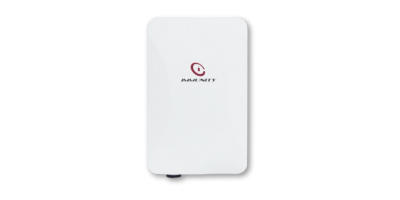 Outdoor wireless
Frontage and forecourt coverage.
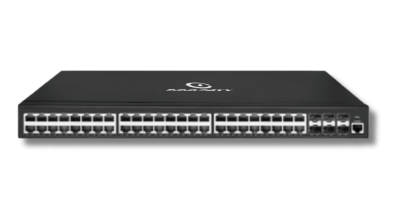 8-port PoE+
Compact managed PoE+ switching per store.
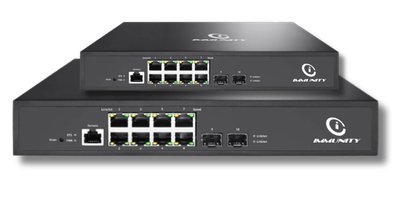 PoE switching
Managed PoE access for larger formats.
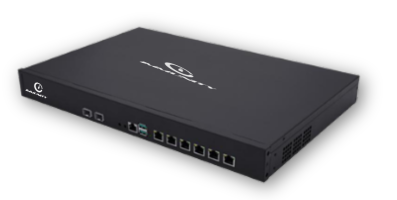 Gateway & policy
Security, portal and policy in one appliance.
 Management
Central console for the whole estate.
They can share the physical infrastructure while being strictly separated on distinct VLANs enforced in NetForce switching hardware, with policy applied at the NetGuard X5 gateway.
Equipment is pre-configured centrally and adopts its settings when it connects, so the on-site task is physical installation only.
Yes. NetCloud Central provides one view of the estate with per-store detail and remote operations.
Because configuration is central and the design is templated, a refit is a re-installation rather than a redesign, and replacing failed hardware is a swap rather than a reconfiguration.
Run the template in a small number of real stores of each format, including a difficult one. A pilot that only covers easy sites tells you very little.
Floor plans marked with construction type, concurrent devices at the busiest hour, the traffic classes that must stay separate, existing switching and cabling, and where it fails today. We return a design document you are free to tender against.
Tell us how many stores you have, the formats they fall into and what your payment separation requirements are. Our engineers will propose a store template and a rollout plan.
Real sites, real constraints: how the same products were put to work elsewhere.
Passenger Wi-Fi across six international terminals, run from one NetCloud console.
Read case study →AviationStandard public Wi-Fi at 13 regional airports, rolled out with zero-touch provisioning.
Read case study →HealthcareBranded guest Wi-Fi kept apart from clinical and admin systems.
Read case study →Tell us about your sites and users. Our India-based engineers will recommend the right stack and send across datasheets and pricing, usually within one business day.